


Melbourne, April 2024
TL;DR: The Bell Curve meme is the most important philosophical diagram of the internet age. It reveals a hidden truth: The “Dumb” and the “Genius” often agree, while the “Midwit” in the middle over-complicates everything to signal intelligence. If you want to find the truth, stop trying to sound smart.
A while back, I was in a discussion with someone who passionately defended the idea that ignorance is bliss.
I disagreed. I always thought knowledge was power. I figured, “Gee, ignorant people must really be missing out on the nuances of life.”
I was wrong. It turns out, there is a specific kind of “smart” that makes you miserable, ineffective, and wrong.
And oddly enough, the best explanation for this comes from a meme.
Introducing: The Bell Curve
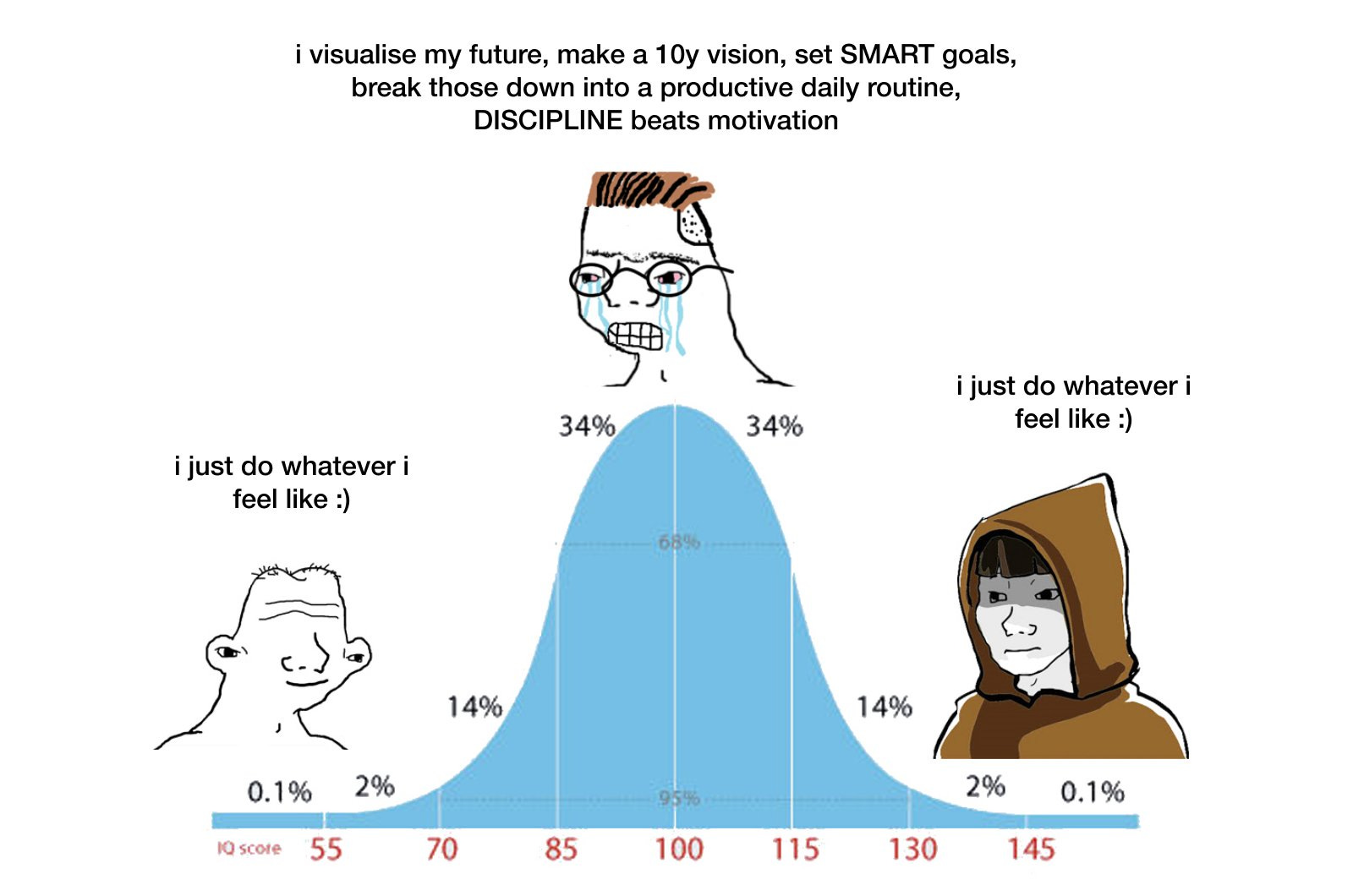
Memes are “data compression.” They allow us to transmit complex cultural ideas instantly. And the Bell Curve Meme is a masterclass.
It shows three types of people:
The “Brainlet” (Left): Holds a simple, straightforward opinion.
The “Midwit” (Middle): Holds an overly complicated, nuanced, “sophisticated” opinion.
The “Jedi” (Right): Holds the same simple, straightforward opinion as the Brainlet.
The Punchline: The “Dumb” guy and the “Genius” guy agree. The guy in the middle is the only one who is wrong.
The Midwit Trap
The “Midwit” (IQ 100-115) is a dangerous place to be. This person is smart enough to understand nuance, but not smart enough to filter it. They are obsessed with appearing intelligent. They love jargon, credentials, and “best practices.”
Example: Investing
The Brainlet: “I buy Bitcoin because number go up.”
The Midwit: “Well, you have to consider the macroeconomic headwinds, the correlation with the Nasdaq, the regulatory environment, and the Sharpe ratio...”
The Jedi: “I buy Bitcoin because number go up.”
The Brainlet is right for the wrong reasons. The Jedi is right for the right reasons. The Midwit is broke.
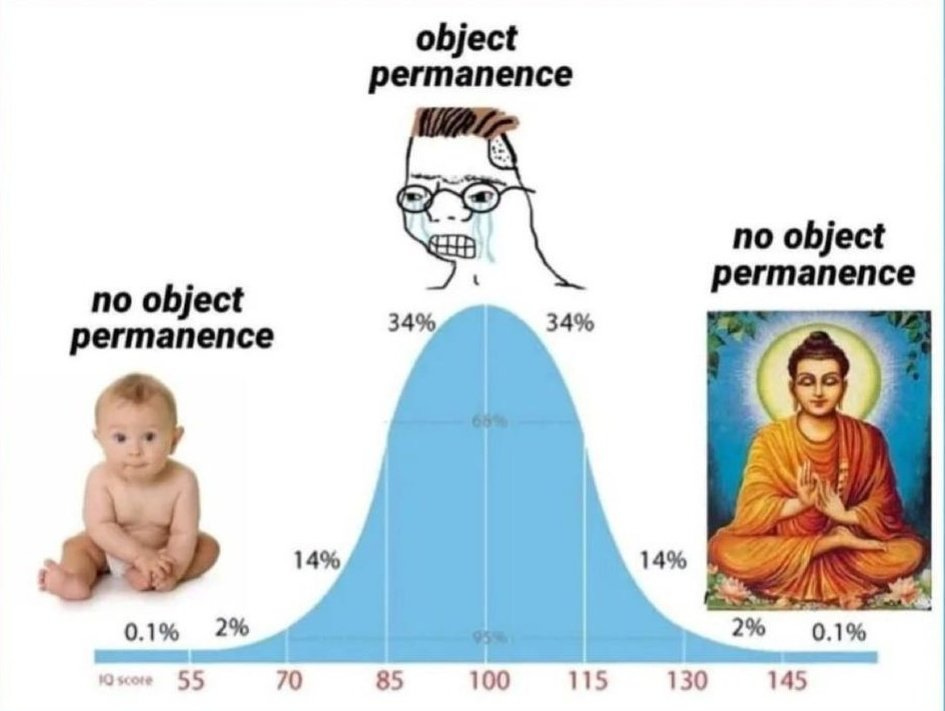
Enlightenment is a Shape-Shifter
Let’s look at how this plays out in real life.
Housing:
Left: “I need a roof over my head.”
Middle: “I need a 4-bedroom colonial with a heated garage for the rowing machine I don’t use and a guest room for people I don’t like.”
Right: “I need a roof over my head.”
Corporate Work:
Left: “Let’s build the product.”
Middle: “Let’s have a 5-hour brainstorming workshop to define the ‘who, what, where, and why’ of our synergistic go-to-market strategy.”
Right: “Let’s build the product.”
The best tool is no tool. The best meeting is no meeting. But the Midwit is terrified of simplicity because simplicity looks “dumb.”
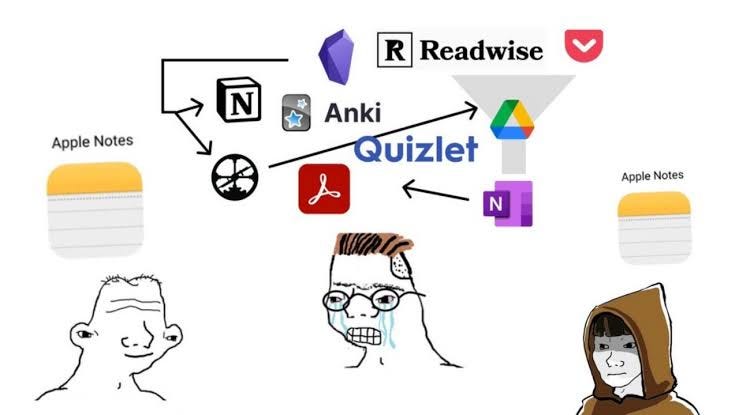
The Comfort of the Herd
The middle of the curve is cozy. It is the protection of the herd. It is the peace of mind that comes from knowing you are following the rules.
But here is the analogy: Would you rather spend your life as an NPC (Non-Player Character)? The Midwit is the villager who sells you the copper sword. He follows the script. He never goes off the path.
Don’t settle for the middle.
If most people say something is “stupid” or “too simple,” pay attention. You might be onto something extraordinary.
In fact, a prerequisite for enlightenment is the willingness to look stupid.
Where the Alpha Is
The middle is where everything is “priced in.” It is where the common knowledge lives. It is where you get average returns, average stress, and average results.
The tails of the distribution are where the Alpha is.
Truly great ideas—the airplane, the internet, the iPhone – sounded stupid to the Midwits.
“Why do we need a flying machine? Trains are fine.”
“Why do we need a computer in our pocket? We have calculators.”
By the time an idea sounds “smart” to everyone, it is too late to profit from it.
If most people say it's stupid, you might be onto something extraordinary.
Conclusion
Ask yourself: Am I over-complicating this just to feel smart?
Simplicity is risky. It feels dangerous to say “just do it” when everyone else is writing a 40-page strategy deck. But being on the edge is freeing.
Who knows? A little contrarianism might pay off. And if not, the herd will always be there to welcome you back into the fold.
The question is, will you want to go back?
WoW, tHat’S eXacTLy wHAt a MiDwiT WouLd sAY! (I guess that’s true, too.)
Goodbye for now.
By the time an idea sounds good to everyone, it’s probably too late.
Here’s a last one for the road:
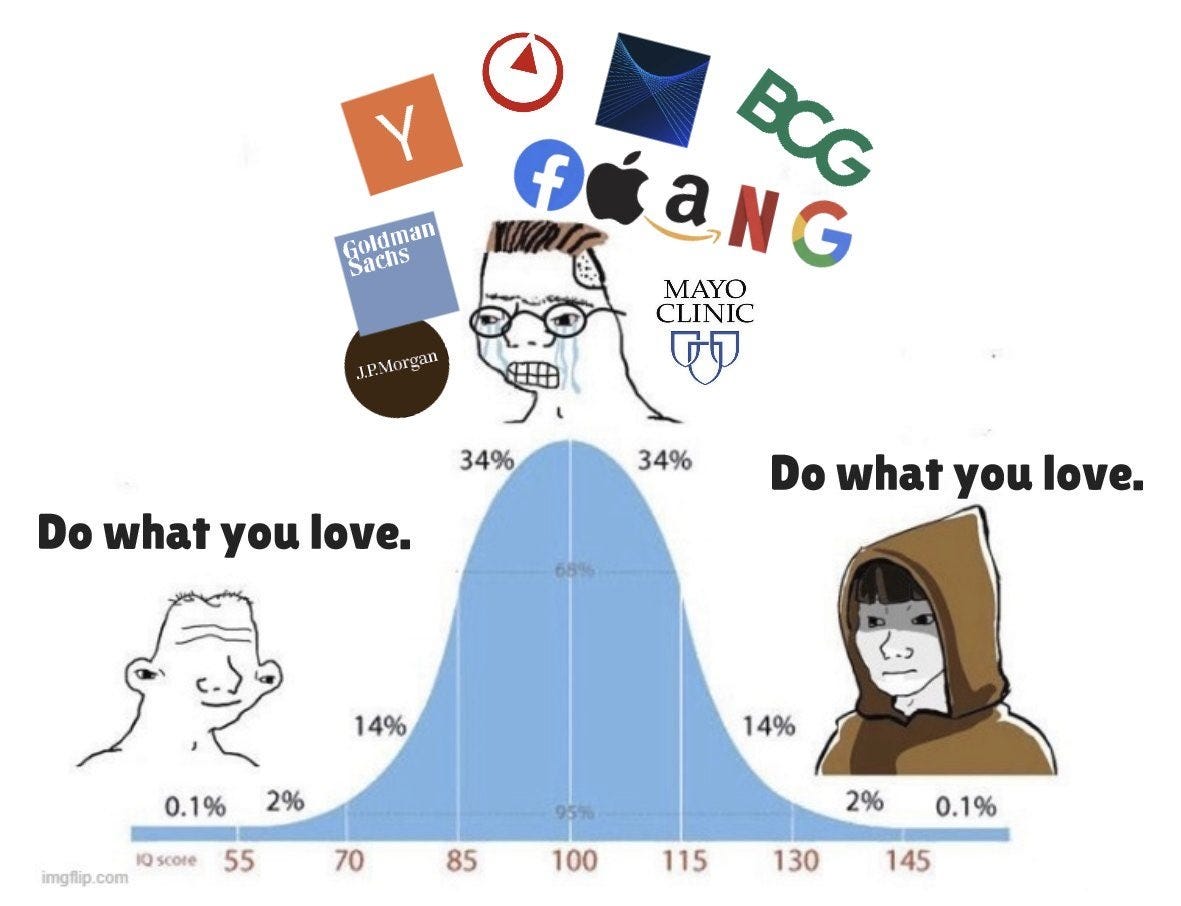
PS: The bell curve phenomenon is linked to my More Information ≠ More Informed post. Feel free to check it out! ⬇️

Memes apart, you're hinting at a slippery but pervasive subject rather difficult to put your finger on. One that surely will accompany you throughout all your life, and surprisingly you may find yourself wading the ins and outs of the concept several times, curiously not getting any clearer perspective each time ;-)
Yet, keeping at it is not an option but the way our brains are wired...